Temperature conditions can significantly influence the performance, safety, and service life of manufactured products. Electronic devices may experience changes in operating behavior, plastics can expand or contract, and mechanical components may respond differently when exposed to heat or cold. For manufacturers, understanding these effects is essential to developing products that perform consistently under their intended operating conditions.
Controlled temperature testing allows engineers to investigate how materials and components respond to defined thermal environments. Instead of relying solely on field observations, laboratories can establish repeatable conditions and examine product behavior under carefully documented procedures.
The value of this process depends on selecting suitable equipment, defining meaningful test objectives, and interpreting results within the context of the product’s intended application.
Understanding the Purpose of Temperature Testing
Temperature testing involves exposing a specimen to specified thermal conditions and evaluating its response. Depending on the objective, the procedure may require maintaining a stable temperature, changing between setpoints, or repeating exposure cycles.
Each approach provides different information. Constant-temperature testing can help assess performance after a defined period of conditioning, while temperature cycling may reveal problems associated with repeated expansion and contraction.
For example, an electronic sensor might need to operate reliably across a particular temperature range. A plastic housing may require dimensional evaluation after thermal exposure, while a seal could be examined for changes in flexibility or fit.
The test method should be selected according to the question engineers need to answer. Applying heat or cold without defined conditions and acceptance criteria may produce observations, but those observations will not necessarily provide a reliable basis for product qualification.
Why Temperature Testing Matters in Product Development
Detecting Potential Design Weaknesses
A product may perform correctly under ordinary laboratory conditions but behave differently at temperature extremes. Materials, solder joints, seals, connectors, and mechanical interfaces can respond to thermal changes in ways that affect overall performance.
Testing during product development helps engineers identify potential weaknesses before finalizing a design. If a component deforms or loses functionality under specified conditions, the team can investigate the material selection, assembly method, or product geometry.
Finding these problems early may reduce the cost and complexity of later modifications.
Supporting Consistent Manufacturing Quality
Manufacturers need to determine whether products from different production batches perform consistently. A defined temperature test can provide one part of a broader quality-control process.
For instance, a company may periodically evaluate selected components to investigate whether changes in suppliers, materials, or manufacturing parameters affect performance. Consistent procedures make the results easier to compare.
However, temperature testing should not be treated as a substitute for every other quality check. Depending on the product, inspection, electrical measurements, mechanical evaluation, and other environmental tests may also be necessary.
Improving Understanding of Material Behavior
Materials can respond differently to thermal exposure. Some become more flexible at elevated temperatures, while others may become more brittle under cold conditions. Dimensional changes can also affect the fit between connected parts.
Laboratories can use controlled exposure to compare material formulations or investigate unexpected product behavior. The resulting information may help engineers choose suitable materials and establish operating limits.
Interpretation requires care because material behavior depends on more than temperature alone. Exposure duration, specimen dimensions, manufacturing history, and other environmental factors can influence the results.
Applications Across Different Industries
Electronics and Electrical Equipment
Electronic components may need to function across a defined operating temperature range. Sensors, circuit boards, connectors, control units, and power-related components can all be affected by thermal conditions.
Testing allows engineers to monitor relevant characteristics such as electrical output, startup behavior, signal stability, or post-exposure functionality. The specific measurements depend on the component and the requirements of the applicable test method.
If a device must operate while inside the chamber, the testing setup should accommodate any required electrical connections and instrumentation safely. Engineers should also consider whether the specimen generates heat that could influence the local temperature conditions.
Automotive Components
Automotive products can encounter changing temperatures during operation, storage, transportation, and seasonal use. Components such as sensors, plastic housings, seals, connectors, and selected electronic assemblies may therefore require thermal evaluation.
Laboratory testing can help determine whether a component continues to meet its performance requirements under specified conditions. It may also reveal weaknesses related to material compatibility or assembly design.
The selected procedure should reflect the component’s role and the applicable industry specification. A simple conditioning test should not be assumed to demonstrate performance under every automotive environment.
Plastics, Rubber, and Industrial Materials
Manufacturers of plastics, rubber products, and other engineered materials may use temperature testing to examine dimensional stability and changes in physical properties.
A specimen could be measured before and after exposure to determine whether it has expanded, contracted, deformed, or developed visible defects. Depending on the test objective, further mechanical or material analysis may be needed.
Consistent specimen preparation and measurement methods are important. Without them, differences between samples may be caused by testing variation rather than genuine differences in material performance.
Medical and Laboratory Equipment
Selected medical devices, laboratory instruments, and related components may require evaluation under defined temperature conditions. The purpose could be to verify operating performance, assess material behavior, or support a broader product validation process.
Requirements vary significantly between products, so laboratories should follow the relevant standards and internal procedures. Where testing forms part of a regulated quality system, documentation and traceability may be particularly important.
Selecting Suitable Temperature Testing Equipment
Choosing equipment begins with a clear understanding of the intended test. Laboratories should identify the required temperature conditions, specimen dimensions, exposure duration, measurement plan, and acceptance criteria before comparing systems.
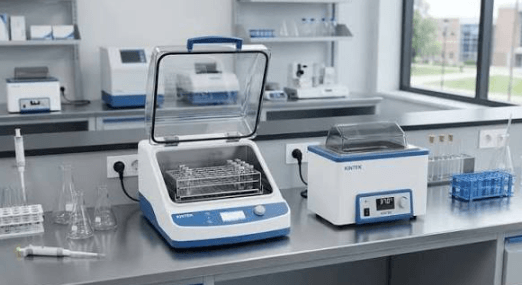
A LIB industry Temperature Test Chamber may be evaluated when a laboratory needs controlled thermal conditions for product or material testing. The specific equipment configuration should be checked against the technical requirements of the intended application.
Temperature Range
The chamber must be capable of achieving the minimum and maximum temperatures specified by the test procedure. It is important to confirm that the required conditions can be maintained with the expected sample load rather than considering only the equipment’s stated limits.
Laboratories should also account for the temperatures at which products are expected to operate or be stored. These conditions may differ, and the appropriate test profile should reflect the purpose of the evaluation.
Temperature Stability and Uniformity
Temperature stability describes how much the temperature changes over time at a particular location. Uniformity refers to differences in temperature between locations within the chamber’s working area.
Both characteristics can influence test results. If the temperature varies significantly across the specimen, different parts may experience different conditions. This can complicate comparisons and make it harder to interpret the findings.
Review the manufacturer’s technical specifications and determine whether verification measurements are required for the intended procedure.
Working Volume and Specimen Capacity
The internal working space should accommodate the largest expected specimen, any necessary fixtures, and the sensors required for monitoring.
The sample arrangement should also allow the specified conditions to reach the specimen without unnecessary obstruction. Overloading the chamber or placing samples too close together may affect airflow and thermal performance.
Laboratories should consider likely future requirements as well as immediate needs. A suitable working volume can help avoid restrictions as testing projects evolve.
Programmable Controls and Monitoring
Depending on the application, useful features may include programmable temperature settings, timed operation, alarms, and data-recording functions.
Simple tests may require only a stable setpoint, while more complex procedures may involve multiple temperature stages and specific transition periods. The controls should support the sequence required by the test method.
Accurate records are equally important. Documenting the applied conditions makes it easier to review results, investigate unexpected outcomes, and compare tests conducted at different times.
Maintenance and Installation Requirements
Before installing a chamber, confirm the electrical supply, ambient operating conditions, ventilation needs, and clearance requirements. Operators should have safe access to the working area and sufficient room to carry out maintenance.
Routine inspections can help identify damaged seals, unusual noises, control irregularities, or other signs of changing equipment performance. Maintenance and calibration should follow the manufacturer’s recommendations and the laboratory’s quality procedures.
See also: Crypto Technology and Market Innovation
Establishing a Reliable Testing Procedure
Good testing begins before the chamber is switched on. First, identify the purpose of the evaluation and the relevant test standard or product specification. Establish the required temperature profile, exposure duration, measurement method, and acceptance criteria.
Prepare the specimen according to the procedure and record its initial condition. Information such as product identification, material, batch number, dimensions, and visible defects can help maintain traceability.
Next, verify that the equipment is ready for use. Confirm the intended settings and check that the sample arrangement is appropriate. If sensors or functional connections are required, position them according to the testing plan.
During the exposure, monitor the relevant parameters and record any deviations. Avoid making undocumented adjustments because these may affect the interpretation of the results.
After testing, inspect the specimen and carry out the required measurements. Some materials need a defined recovery period before their final dimensions or properties are evaluated, so follow the procedure rather than applying an arbitrary inspection time.
Finally, compare the findings with the acceptance criteria. If the sample does not meet requirements, investigate possible causes systematically. Material variation, assembly problems, specimen preparation, and testing conditions may all contribute to the observed result.
Common Mistakes to Avoid
One common mistake is assuming that a chamber’s temperature range alone guarantees suitability. Stability, uniformity, recovery behavior, working capacity, and control capabilities may also be important.
Another mistake is failing to consider the effect of specimen loading. A chamber’s behavior under load may differ from its behavior when empty, so the intended sample arrangement should be considered during equipment selection and test planning.
It is also important not to confuse different thermal procedures. Constant-temperature exposure, temperature cycling, and thermal shock involve distinct requirements and should not be treated as interchangeable.
Finally, incomplete records can weaken otherwise useful results. Laboratories should document test settings, sample details, measurements, and deviations so that the procedure can be reviewed and repeated.
Frequently Asked Questions
1. What is a temperature test chamber used for?
A temperature test chamber provides controlled thermal conditions for evaluating products, components, and materials. It can support product development, material research, performance verification, and selected quality-control procedures.
2. What specifications should be checked before purchasing a chamber?
Important factors include the required temperature range, stability, uniformity, internal working volume, control functions, monitoring capabilities, installation requirements, and maintenance support. These specifications should match the intended test method.
3. Can temperature testing predict a product’s entire service life?
Not by itself. Temperature testing provides information about a product’s response under the conditions applied. Predicting service life may require additional methods, longer-term studies, field data, and other environmental or mechanical evaluations.
Conclusion
Controlled temperature testing helps manufacturers investigate product behavior, identify design weaknesses, and improve quality-control decisions. Its effectiveness depends on selecting suitable equipment and applying a repeatable procedure that reflects the product’s intended operating conditions.
By reviewing temperature performance, specimen capacity, monitoring features, and maintenance requirements, laboratories can choose equipment that supports their testing objectives. Careful preparation, consistent operating practices, and complete documentation then help turn laboratory observations into useful evidence for product development and reliability improvement.
 By